
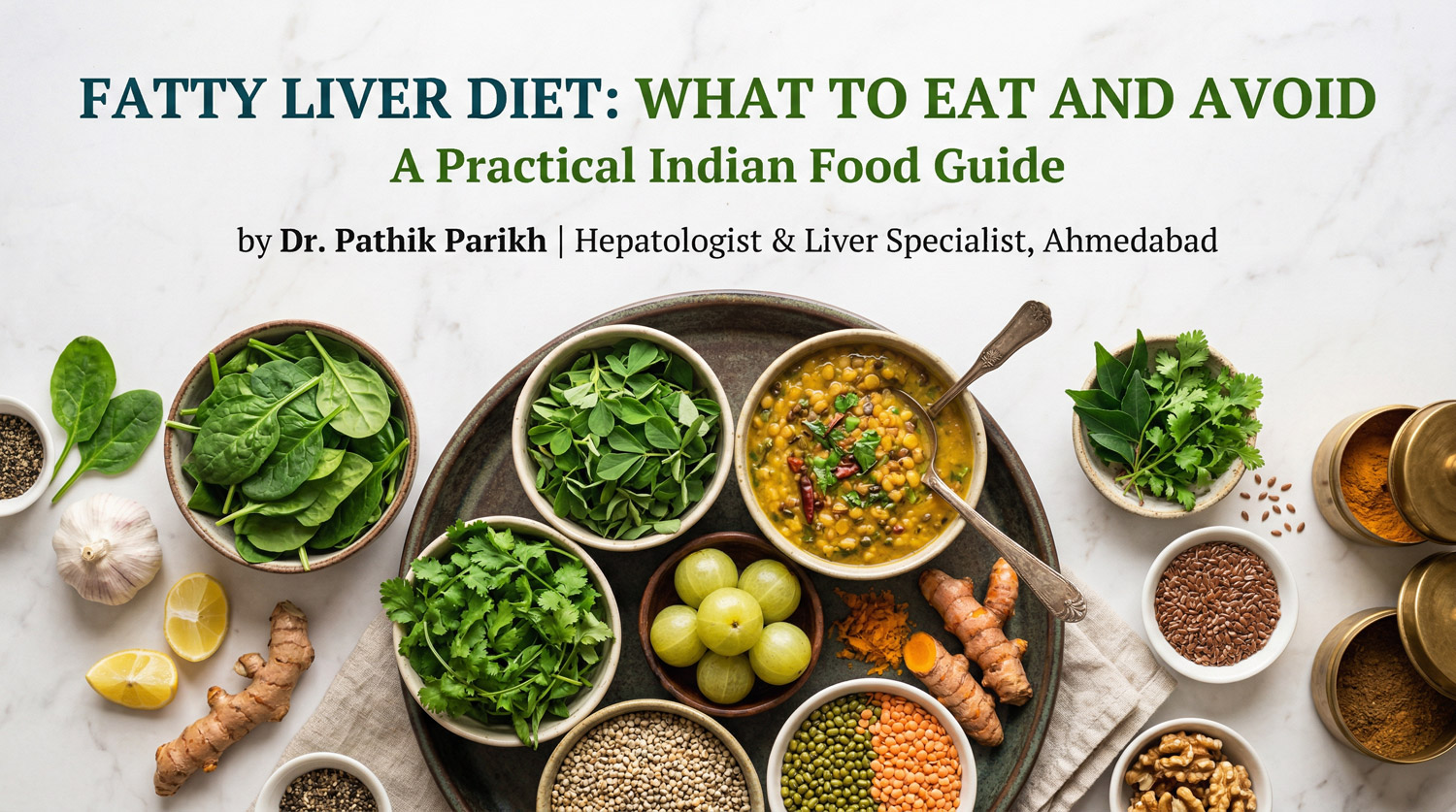
A Practical Indian Food Guide
By Dr. Pathik Parikh | Hepatologist & Liver Specialist, Ahmedabad
Fatty liver disease — or Non-Alcoholic Fatty Liver Disease (NAFLD) — is one of the most common liver conditions affecting Indians today. Studies suggest that nearly 1 in 3 urban Indians has some degree of fatty liver, often without knowing it.
The good news? In most cases, fatty liver can be reversed — and diet is your most powerful tool. This guide breaks down exactly what to eat and what to avoid, with practical advice tailored to an Indian lifestyle and kitchen.
What Is Fatty Liver Disease?
Fatty liver occurs when excess fat builds up in the liver cells. A small amount of fat is normal, but when fat makes up more than 5–10% of the liver’s weight, it can impair liver function and, over time, lead to inflammation, scarring (fibrosis), or cirrhosis.
There are two main types:
- Non-Alcoholic Fatty Liver Disease (NAFLD) — caused by obesity, diabetes, high cholesterol, or poor diet
- Alcoholic Fatty Liver Disease (AFLD) — caused by excessive alcohol consumption
This guide focuses on NAFLD, the type most commonly seen in Indian patients.
The Role of Diet in Fatty Liver
Your liver processes everything you eat. When you regularly consume excess sugar, refined carbohydrates, unhealthy fats, or processed foods, the liver converts the surplus into fat and stores it within liver cells.
Changing your diet can significantly reduce liver fat within 8–12 weeks. You don’t need a drastic overhaul — small, consistent changes to your daily Indian meals can make a big difference.
Foods to EAT — The Liver-Friendly Indian Diet
- Whole Grains Over Refined Grains
Refined carbohydrates like white rice and maida rapidly spike blood sugar and contribute to fat storage in the liver. Swap them for:
- Brown rice or red rice instead of white rice
- Multigrain or whole wheat roti instead of maida-based rotis
- Oats, daliya (broken wheat), and jowar/bajra rotis
- Quinoa as an occasional substitute
- Lentils and Legumes (Dal)
Dal is one of the best foods for a fatty liver diet. Rich in plant-based protein and fibre, lentils help regulate blood sugar, reduce fat absorption, and support liver detoxification.
- Moong dal, masoor dal, chana dal — all excellent choices
- Rajma and chole in moderation (1–2 times per week)
- Sprouts (moong, methi) as a nutritious snack or breakfast
- Vegetables — The More, The Better
Most vegetables are liver-friendly. Focus on:
- Leafy greens: palak (spinach), methi (fenugreek), sarson — rich in antioxidants that protect liver cells
- Cruciferous vegetables: cauliflower, broccoli, cabbage — known to support liver enzyme function
- Bitter gourd (karela) — a traditional remedy backed by some evidence for lowering blood sugar and liver fat
- Garlic and onions — contain sulphur compounds that help the liver flush out toxins
- Beets, carrots, and tomatoes — rich in betaine and lycopene, both protective for the liver
- Healthy Fats
Not all fats are bad. The liver actually needs healthy fats to function properly.
- Mustard oil or cold-pressed groundnut oil in small quantities for cooking
- A small handful of walnuts or almonds daily — rich in omega-3 fatty acids and antioxidants
- Flaxseeds (alsi) — add a teaspoon to dahi, smoothies, or rotis
- Avocado — if available, excellent for liver health
- Protein Sources
Adequate protein supports liver cell repair and regeneration.
- Dahi (curd) / low-fat chaas (buttermilk) — also provides probiotics that support gut-liver health
- Low-fat paneer in moderation
- Eggs (1–2 per day) — excellent protein source
- Fish, especially rohu, katla, or salmon — omega-3 rich, reduces liver inflammation
- Chicken (without skin) — lean protein option
- Fruits (in Moderation)
Fruits contain fructose, which in large amounts can worsen fatty liver. However, fibre-rich fruits in moderate quantities are beneficial.
- Amla (Indian gooseberry) — one of the most liver-protective foods in Ayurveda and modern nutrition
- Papaya, guava, pear — low glycemic, high in fibre
- Pomegranate — rich in antioxidants
- Limit: mangoes, bananas, grapes, chikoo, and packaged fruit juices
- Green Tea and Coffee
Studies consistently show that 2–3 cups of green tea or coffee per day are associated with lower liver fat and reduced risk of liver disease progression. Drink without sugar.
Quick Reference: Indian Foods for Fatty Liver
| ✅ Eat More Of | ❌ Limit or Avoid |
| Brown rice, jowar, bajra roti | White rice, maida roti, naan |
| Moong dal, masoor dal, chana | Fried snacks, samosas, kachori |
| Palak, methi, karela, lauki | Packaged namkeen, chips, biscuits |
| Dahi, chaas (low fat) | Full-fat cream, malai, makkhan |
| Walnuts, almonds (small handful) | Mithai, gulab jamun, jalebi |
| Amla, guava, papaya | Mango juice, cola, sugary drinks |
| Green tea, black coffee | Packed fruit juices, energy drinks |
| Fish, eggs, lean chicken | Processed meats, red meat (daily) |
| Mustard oil (small qty) | Palm oil, vanaspati, dalda |
Foods to AVOID – What’s Hurting Your Liver
- Sugar and Sugary Foods
Excess sugar — especially fructose — is directly converted into liver fat. This is the single most important dietary change for fatty liver patients.
- Mithai, barfi, halwa, kheer — even during festivals, keep portions very small
- Packaged biscuits, cakes, and breakfast cereals with added sugar
- Cold drinks, packaged fruit juices, energy drinks
- Tea or coffee with 2–3 teaspoons of sugar, multiple times a day
- Refined and Fried Foods
- Puri, bhatura, fried pakoras — occasional is fine, daily is harmful
- Namkeen, chips, and packaged snacks
- White bread, maida-based buns and parathas
- Alcohol
If you have fatty liver, alcohol should be completely avoided. Even moderate drinking can accelerate liver damage when fatty liver is already present.
- High-Fat Dairy
- Full-fat milk and cream in large quantities
- Paneer in excess (1–2 small servings per day is fine)
- Malai, makkhan, and ghee in excessive amounts
Sample 1: Day Indian Meal Plan for Fatty Liver
| Meal | What to Eat |
| Early Morning (6–7 AM) | 1 cup warm water with amla juice or lemon. Optional: soaked walnuts (4–5) |
| Breakfast (8–9 AM) | Oats upma with vegetables OR moong dal chilla with green chutney. 1 cup green tea (no sugar) |
| Mid-Morning Snack (11 AM) | 1 fruit (guava or pear) OR a small bowl of sprouts |
| Lunch (1–2 PM) | 2 multigrain rotis + 1 bowl dal + 1 bowl sabzi (palak, lauki, or methi) + 1 katori low-fat dahi. Small portion of brown rice optional |
| Evening Snack (4–5 PM) | 1 cup chaas (without cream) OR 1 cup green tea with a handful of almonds |
| Dinner (7–8 PM) | 2 rotis + light vegetable sabzi + 1 bowl dal or grilled fish/chicken. Avoid heavy meals after 8 PM |
| Post-Dinner | 1 small piece of dark chocolate (70%+) is fine occasionally. No dessert or sweets |
Beyond Diet: Lifestyle Changes That Help
Diet alone works best when combined with:
-
- Physical activity: Even 30 minutes of brisk walking 5 days a week can significantly reduce liver fat within weeks
- Weight management: Losing even 5–10% of your body weight can dramatically improve liver health
- Sleep: Poor sleep is linked to increased liver fat — aim for 7–8 hours
- Stress management: Chronic stress raises cortisol, which promotes fat storage in the liver
- Regular monitoring: Get a Fibroscan or liver ultrasound done annually if you have fatty liver
When to See a Liver Specialist
- You have been told you have Grade 2 or Grade 3 fatty liver
- You have diabetes, high blood pressure, or high cholesterol alongside fatty liver
- You have symptoms like persistent fatigue, right-side abdominal discomfort, or jaundice
- Your liver enzymes (SGOT/SGPT) remain elevated despite diet changes
- You have a family history of liver disease or cirrhosis
- You’ve had fatty liver for more than 2 years without improvement
FAQ’s
- Can I eat rice if I have fatty liver?
Yes, but switch to brown rice or red rice and reduce portion size. White rice in large quantities spikes blood sugar, which contributes to liver fat. - Is ghee bad for fatty liver?
A small amount of pure desi ghee (1 teaspoon per day) is not harmful. However, excessive ghee, especially combined with a high-carb diet, can worsen fatty liver. - How quickly can diet reverse fatty liver?
With consistent dietary changes and regular walking, studies show measurable reduction in liver fat within 8–12 weeks. - Can I eat outside food?
Occasionally is fine. Choose grilled or tandoori options over fried. Avoid fried snacks, creamy gravies, and sugary desserts when eating out. - Is fruit juice okay?
No — packaged fruit juices are high in fructose and should be avoided. Whole fruits in moderate quantities are fine.
Concerned About Your Liver Health?
Diet is a great first step — but every patient is different. If you have been diagnosed with fatty liver, or suspect you may have it, a personalised evaluation by a liver specialist can give you clarity and a targeted treatment plan.
Dr. Pathik Parikh is a leading Hepatologist & Liver Specialist based in Ahmedabad.
📞 Book an Appointment: Click Here
Medical Disclaimer: This article is for educational purposes only and is not a substitute for professional medical advice. Please consult Dr. Pathik Parikh or a qualified healthcare provider before making changes to your diet or treatment plan.