
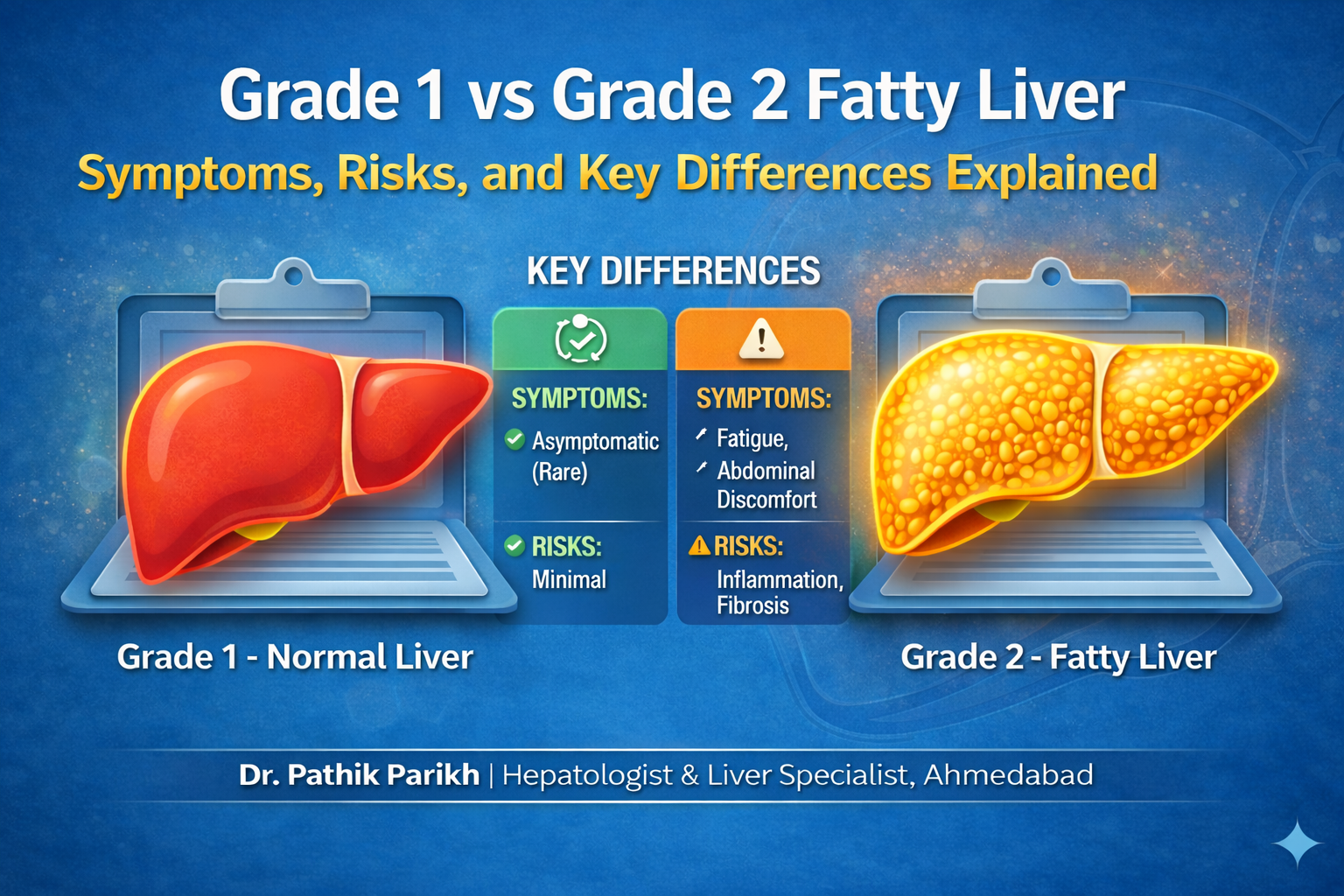
Grade 1 vs Grade 2 Fatty Liver: Symptoms, Risks and Key Differences Explained
By Dr. Pathik Parikh | Hepatologist & Liver Specialist, Ahmedabad
Introduction to Fatty Liver Disease
Fatty liver disease, medically known as hepatic steatosis, is a condition in which excess fat accumulates in the liver cells (hepatocytes). While the liver naturally contains some fat, it becomes a medical concern when fat makes up more than 5% of the liver’s total weight. The condition is increasingly common worldwide, affecting an estimated 25–30% of the global adult population and is strongly linked to obesity, type 2 diabetes, metabolic syndrome and excessive alcohol consumption.
Fatty liver disease is broadly classified into two types: Non-Alcoholic Fatty Liver Disease (NAFLD) — now increasingly referred to as Metabolic-Associated Steatotic Liver Disease (MASLD) — and Alcoholic Fatty Liver Disease (ALD). Within each category, severity is graded on a scale, with Grade 1 (mild) and Grade 2 (moderate) representing distinct stages that carry different implications for health, monitoring and treatment.
Understanding the difference between these grades is essential for patients and caregivers alike, as the distinction influences clinical decisions, lifestyle interventions, and the risk of developing more serious liver complications.
How Is Fatty Liver Graded?
The grading of fatty liver disease is primarily determined by the degree of fat infiltration in liver tissue. Physicians use several tools to assess and classify the severity:
- Ultrasound (most common): Assesses liver echogenicity (brightness) compared to the kidney or spleen.
- CT Scan or MRI: Provides more precise fat quantification, especially in complex cases.
- Liver Biopsy (gold standard): Microscopic examination to determine exact fat percentage, inflammation and fibrosis.
- FibroScan (Transient Elastography): Measures liver stiffness and fat content non-invasively.
The standard grading system is:
- Grade 0 – Normal liver (< 5% fat)
- Grade 1 – Mild steatosis (5–33% of hepatocytes affected)
- Grade 2 – Moderate steatosis (33–66% of hepatocytes affected)
- Grade 3 – Severe steatosis (> 66% of hepatocytes affected)
Grade 1 Fatty Liver — Mild Steatosis
What Does Grade 1 Mean?
Grade 1 fatty liver indicates that between 5% and 33% of liver cells have fat deposits within them. On ultrasound imaging, the liver appears slightly brighter than usual (mildly hyperechoic), but the portal vein walls and diaphragm remain clearly visible. At this stage, the liver architecture is largely preserved and there is typically no significant inflammation or scarring.
Symptoms of Grade 1
The vast majority of individuals with Grade 1 fatty liver are completely asymptomatic. The condition is most commonly discovered incidentally during a routine health check-up or abdominal ultrasound performed for an unrelated reason. When symptoms are reported, they may include:
- Mild fatigue or a general sense of tiredness
- Occasional mild discomfort or heaviness in the upper-right abdominal area
- Slight bloating after meals
Liver function tests (LFTs) in Grade 1 are often within normal limits or show only a borderline elevation in ALT (alanine aminotransferase) and AST (aspartate aminotransferase).
Risk Factors and Causes
Grade 1 fatty liver is commonly associated with:
- Overweight or mild obesity (BMI 25–30)
- Sedentary lifestyle with low physical activity
- Insulin resistance or prediabetes
- Mildly elevated triglycerides
- Poor dietary habits — high sugar, refined carbohydrates, saturated fats
- Moderate alcohol consumption
- Certain medications (corticosteroids, tamoxifen, amiodarone)
Prognosis and Reversibility
Grade 1 fatty liver is considered highly reversible with appropriate lifestyle modifications. Studies show that a weight loss of just 5–7% of total body weight can significantly reduce liver fat content. With sustained changes in diet, exercise and management of metabolic risk factors, complete resolution is achievable in many patients.
Clinical Note : Grade 1 fatty liver, when identified early, carries an excellent prognosis. It represents a critical window of opportunity for intervention before the disease progresses to more serious stages.
Grade 2 Fatty Liver — Moderate Steatosis
What Does Grade 2 Mean?
Grade 2 fatty liver signifies that between 33% and 66% of liver cells are affected by fat accumulation. On ultrasound, the liver shows moderate-to-marked hyperechogenicity and the visualization of deeper structures such as the portal vein walls and diaphragm begins to become obscured. The liver may also appear slightly enlarged (hepatomegaly).
At this stage, the liver’s ability to function may begin to be subtly impaired and the risk of progression to more dangerous forms of liver disease — particularly Non-Alcoholic Steatohepatitis (NASH) — increases significantly.
Symptoms of Grade 2
While Grade 2 may still be largely asymptomatic, symptoms are more likely to be present compared to Grade 1. Patients may experience:
- Persistent fatigue and low energy levels
- Dull, aching discomfort or a feeling of fullness in the right upper quadrant
- Nausea or reduced appetite
- Unexplained weight changes
- Difficulty concentrating (hepatic encephalopathy is not typical at this stage, but subtle cognitive effects may occur)
Liver enzymes (ALT and AST) are more commonly elevated in Grade 2, though they can still fall within the normal range in some individuals. The AST-to-ALT ratio and GGT (gamma-glutamyl transferase) may provide additional clues.
Risk Factors and Causes
Grade 2 fatty liver shares many risk factors with Grade 1 but is typically associated with more pronounced metabolic dysfunction:
- Obesity (BMI > 30), particularly central/abdominal obesity
- Type 2 diabetes or significant insulin resistance
- Metabolic syndrome (a cluster of hypertension, dyslipidemia, central obesity and impaired glucose tolerance)
- Heavy or chronic alcohol consumption
- Rapid weight gain or loss (e.g., crash dieting)
- Genetic predisposition (PNPLA3, TM6SF2 gene variants)
- or polycystic ovarian syndrome (PCOS)
Prognosis and Reversibility
Grade 2 fatty liver is still reversible, but the timeline and effort required are substantially greater. Weight loss of 7–10% of body weight is generally recommended and improvements may take several months to become evident on imaging. Medical supervision is strongly advised, as some patients may require pharmacological support alongside lifestyle changes.
Side-by-Side Comparison: Grade 1 vs Grade 2
| Feature | Grade 1 (Mild) | Grade 2 (Moderate) |
|---|---|---|
| Fat accumulation | 5–33% of liver cells | > 33% of liver cells |
| Visible on ultrasound | Mild brightness | Moderate-to-bright echogenicity |
| Symptoms | Usually none | Fatigue, upper-right discomfort possible |
| Liver enzymes (ALT/AST) | Normal or mildly elevated | Mildly to moderately elevated |
| Inflammation (NASH risk) | Low | Moderate to high |
| Fibrosis risk | Minimal | Increasing risk |
| Reversibility | Highly reversible | Reversible but requires sustained effort |
| Lifestyle intervention | Recommended | Strongly recommended |
| Medical monitoring | Periodic check-ups | More frequent, specialist involvement |
How Fatty Liver Progresses to Complications
Understanding the disease spectrum is essential for appreciating why early intervention matters. Fatty liver does not always progress, but in a significant subset of patients, the following cascade can occur:
1. Simple Steatosis → Non-Alcoholic Steatohepatitis (NASH)
When fat accumulation is accompanied by hepatic inflammation and liver cell injury (ballooning degeneration), the condition is classified as NASH. This is a pivotal transition because it dramatically increases the risk of fibrosis and cirrhosis. Approximately 20–30% of patients with Grade 2 fatty liver have concomitant NASH, compared to a much lower proportion in Grade 1. Key triggers for this progression include:
- Oxidative stress from lipid peroxidation
- Mitochondrial dysfunction in fat-laden hepatocytes
- Activation of inflammatory pathways (TNF-α, IL-6, TGF-β)
- Gut microbiome dysbiosis
2. NASH→ Liver Fibrosis
Chronic inflammation causes hepatic stellate cells to become activated, leading to the deposition of scar tissue (collagen) within the liver. Fibrosis is graded from F0 (none) to F4 (cirrhosis). Grade 2 fatty liver with NASH carries a meaningful annual fibrosis progression rate, particularly in older patients, those with diabetes and those with higher BMI. Even Grade 1 can progress to fibrosis if underlying metabolic conditions are not controlled.
3. Fibrosis→ Cirrhosis
Advanced fibrosis (F3–F4) represents cirrhosis — irreversible scarring that disrupts normal liver architecture. At this point, the liver loses its ability to function properly, leading to a range of serious complications:
- Portal hypertension: Increased blood pressure in the portal venous system
- Ascites: Accumulation of fluid in the abdominal cavity
- Varices: Dilated blood vessels in the esophagus and stomach that can rupture and bleed
- Hepatic encephalopathy: Brain dysfunction due to the liver’s inability to detoxify ammonia
- Coagulopathy: Impaired production of clotting factors
- Thrombocytopenia: Low platelet count due to splenic sequestration
4. Cirrhosis → Hepatocellular Carcinoma (HCC)
Patients with NASH-related cirrhosis face a 1–2% annual risk of developing hepatocellular carcinoma (HCC), the most common form of primary liver cancer. Importantly, HCC can also develop in patients with advanced fibrosis (F3) even without fully established cirrhosis. This underscores the need for surveillance with abdominal ultrasound and alpha-fetoprotein (AFP) testing every 6 months in high-risk individuals.
5. Cardiovascular Complications
Fatty liver disease — especially at Grade 2 and beyond — is independently associated with an elevated risk of cardiovascular disease (CVD), including:
- Coronary artery disease and heart attack
- Atherosclerosis (plaque buildup in arteries)
- Left ventricular dysfunction
- Stroke
In fact, cardiovascular disease is the leading cause of death in NAFLD patients, surpassing liver-related mortality in many studies. The shared metabolic substrate between fatty liver and CVD — insulin resistance, dyslipidemia, hyper-tension — explains this relationship.
6. Extrahepatic Manifestations
Beyond the liver and heart, fatty liver disease has been associated with a range of systemic conditions:
- Chronic Kidney Disease (CKD): Higher rates of renal impairment in NAFLD patients
- Type 2 Diabetes: Bidirectional relationship — fatty liver worsens insulin resistance and vice versa
- Sleep Apnea: Common comorbidity, particularly in obese patients
- Polycystic Ovary Syndrome (PCOS): Hormonal disruption linked to hepatic fat accumulation
- Hypothyroidism: Thyroid dysfunction can worsen hepatic steatosis
Management and Treatment Approaches
For Grade 1 — Lifestyle-First Strategy
The cornerstone of Grade 1 management is lifestyle modification:
- Diet : Mediterranean diet or low-carbohydrate diet rich in whole grains, vegetables, legumes, olive oil, and lean protein. Avoid added sugars, refined carbohydrates, trans fats and processed foods.
- Exercise : Aim for at least 150 minutes of moderate-intensity aerobic activity per week (e.g., brisk walking, cycling) plus 2 sessions of resistance training.
- Weight loss : Even a 5% reduction in body weight can significantly reduce hepatic steatosis.
- Alcohol : Avoid or strictly limit alcohol intake.
- Monitoring : Repeat liver function tests and ultrasound in 6–12 months to assess response.
For Grade 2 — Enhanced Intervention
Grade 2 requires more aggressive and monitored management:
- All of the above lifestyle measures, with greater urgency and more intensive supervision
- Referral to a hepatologist or gastroenterologist for specialist evaluation
- Fibroscan or liver biopsy to assess for concurrent NASH or early fibrosis
- Management of metabolic co-morbidities: Tight glycemic control, lipid-lowering therapy (statins are generally safe), blood pressure management
- Emerging pharmacotherapy: GLP-1 receptor agonists (e.g., semaglutide) and SGLT-2 inhibitors have shown promising results in reducing hepatic steatosis. Vitamin E may be considered in non-diabetic NASH patients.
- Bariatric surgery: May be considered for morbidly obese patients who fail conventional treatment
When to Seek Medical Attention
Anyone diagnosed with fatty liver — whether Grade 1 or Grade 2 — should maintain regular follow-up with their healthcare provider. However, the following signs warrant urgent medical evaluation:
- Sudden or severe abdominal pain, particularly in the upper right
- Jaundice (yellowing of the skin or eyes)
- Dark urine or pale-colored stools
- Significant and unexplained weight loss
- Swelling of the abdomen or legs
- Confusion or altered mental status
- Easy bruising or bleeding
🩺 Reminder: Fatty liver is largely a silent disease. Do not wait for symptoms to seek evaluation — especially if you have risk factors such as obesity, diabetes, or metabolic syndrome. Early detection and grading can fundamentally change outcomes.
Conclusion
Grade 1 and Grade 2 fatty liver are distinct stages of hepatic steatosis that differ meaningfully in the extent of fat accumulation, risk of disease progression and clinical management. While Grade 1 represents a mild and highly reversible condition, Grade 2 signals a more significant degree of metabolic dysfunction with a substantially higher risk of progression to NASH, fibrosis, cirrhosis and hepatocellular carcinoma.
Both grades share a common foundation: they are metabolic diseases rooted in unhealthy diet, physical inactivity, obesity and insulin resistance. This means both are amenable to the same powerful intervention — sustained, meaningful lifestyle change. The earlier these changes are made, the greater the likelihood of full recovery and the prevention of irreversible liver damage.
Advances in pharmacotherapy, particularly GLP-1 receptor agonists and SGLT-2 inhibitors, are opening new frontiers in the treatment of fatty liver disease, especially for those who struggle with lifestyle change alone. Ongoing research into the gut microbiome, genetic risk factors and biomarker-based monitoring continues to refine our understanding of this increasingly prevalent disease.
Ultimately, both Grade 1 and Grade 2 fatty liver serve as warning signals from the body — an opportunity to recalibrate and protect liver health before irreversible damage occurs.
Medical Disclaimer: This article is intended for general informational purposes only and does not constitute medical advice, diagnosis, or treatment. Always consult a qualified healthcare professional regarding any medical conditions or concerns. Individual medical situations vary and only a licensed physician can provide guidance appropriate to your specific circumstances.